Which Document is Ultimately Valid for Proving Citizenship?
Saurabh Varshney
The national debate regarding citizenship in India has intensified once again. After the Ministry of External Affairs clarified that a passport is not, in itself, the final and conclusive proof of citizenship, the opposition has questioned the government; meanwhile, the government maintains that citizenship is determined not by a single document alone, but through a comprehensive examination of the law and available evidence. This dispute is not merely legal; it is also linked to democratic rights and the trust of citizens. The common citizen’s primary question is this: if Aadhaar, Voter ID, PAN card, and even the passport are not conclusive proof, then how exactly is Indian citizenship to be established? In a democracy, the greatest strength lies in the trust of the citizen. If citizens remain in a state of uncertainty regarding the proof of their own rights, the situation cannot be considered appropriate for any democratic system. Therefore, the need of the hour is to make the citizenship certification process clear, easily accessible, and free from controversy, ensuring that no Indian has to face uncertainty regarding the question of proving their citizenship.
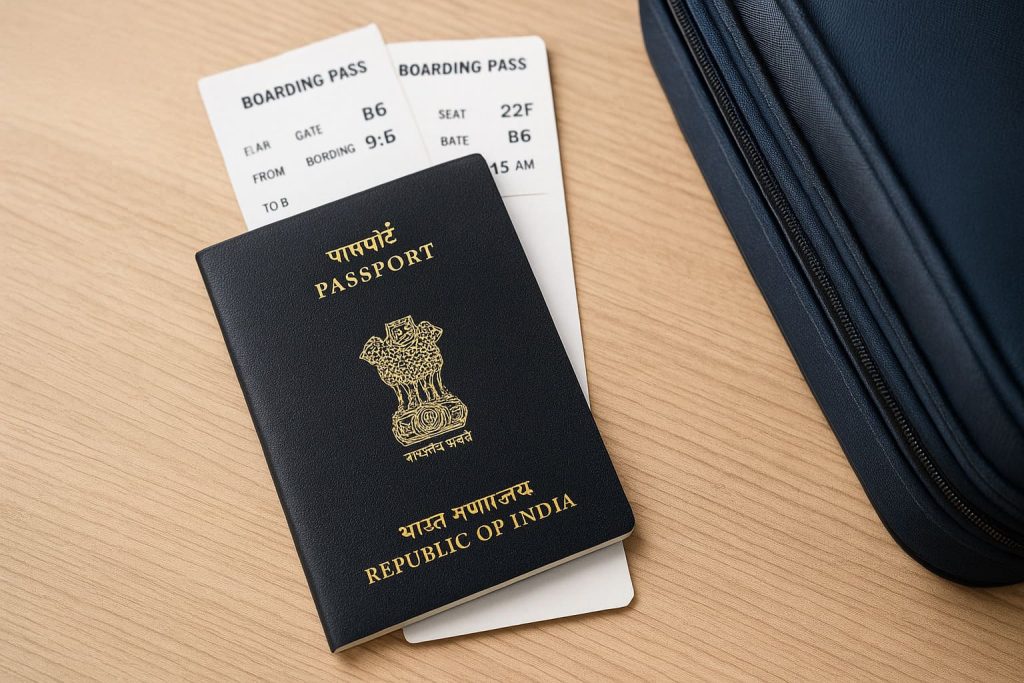
First, it is essential to understand that identity and citizenship are not the same thing. An Aadhaar card serves as proof of identity and residence. A Voter ID is proof of the right to vote. A PAN card establishes identity for income tax purposes. A driving license grants permission to drive a vehicle. A passport is a document for foreign travel and international identification. However, none of these documents, in isolation, is considered the final legal proof of citizenship.
How, then, is citizenship determined? In India, citizenship is governed by the Citizenship Act, 1955. According to this law, the primary grounds for acquiring citizenship are: by birth, by descent, by registration, by naturalization, and by the incorporation of territory into India. If a person’s citizenship is called into question, the relevant authority conducts a comprehensive assessment of available documents—such as birth records, parental citizenship details, government records, and other legal evidence. No single document is considered conclusive in every situation.In recent years, the birth certificate has emerged as a crucial foundational document, as it provides a record of both the date and place of birth. However, for individuals born decades ago who lack birth certificates, documents such as school certificates, land records, family records, government service records, and other official papers can serve as vital evidence depending on the circumstances.Following a clarification from the Ministry of External Affairs, the opposition raised a question: if a passport is not definitive proof of citizenship, then which document should an ordinary citizen rely upon? Conversely, the ruling dispensation argues that in many countries worldwide, a passport is not the sole legal basis for determining citizenship; in cases of dispute, original citizenship records are the deciding factor. This debate has extended beyond Parliament to political parties and social organizations.
The primary reason for this entire controversy is the absence of a single national citizenship certificate in India that is accepted as conclusive in all situations. Consequently, people often mistake documents like Aadhaar, Voter ID, ration cards, and passports for proof of citizenship, even though each serves a distinct legal purpose.
In a democracy, the mere existence of a law is insufficient; clear and simple communication regarding it is equally essential. If confusion persists among citizens regarding which documents are valid and which are not, it can lead to unnecessary fear and the spread of rumors.
The government should issue clear guidelines on citizenship verification, specifying which documents will be accepted under various circumstances. This would reduce administrative disputes and bolster public confidence.
Every citizen should safeguard original government documents related to their birth, education, family, and property. Digitizing these documents and keeping them updated is also crucial, as these records could prove invaluable during any future legal proceedings. Citizenship is not merely a legal status but the foundation of the rights and duties conferred by the Constitution. Therefore, this issue requires clarity and transparency rather than politics. Instead of confusing citizens, the government should develop a simple, unified, and transparent system for citizenship certification.
The central government now needs to determine exactly which documents are valid for proving citizenship—documents that citizens can present to establish their status. The only solution to this entire matter is for the central government to first hold a press conference to provide clarity on the issue of citizenship, ensuring there is no confusion in the minds of the people across the country.

The author is a senior journalist, thinker, and political analyst.